White spotting on dishes and shower glass
We test your gpg and confirm whether a softener or a salt-free conditioner fits your water. Most Queen Creek homes above 10 gpg get clear glass back within weeks of a correctly sized install.
Water Hardness Testing Queen Creek AZ gives you the real grains-per-gallon number for your home, not a strip that changes color in the sun. We test at the tap, check for iron and TDS, and hand you a written report the same visit. If your dishes spot, your shower glass fogs, or your water heater rumbles, this is where you start.
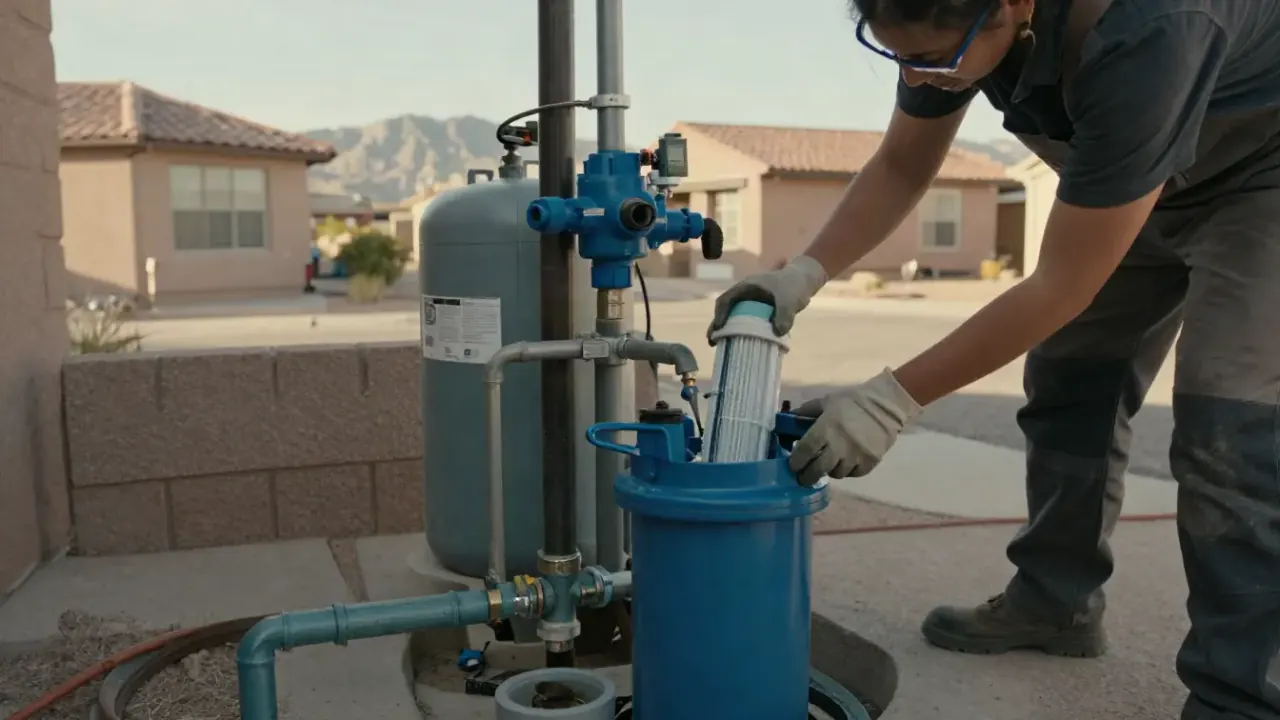
Water Hardness Testing Queen Creek AZ is a diagnostic service that measures dissolved calcium and magnesium in your water and reports it in grains per gallon and milligrams per liter. We pull a sample from a cold kitchen tap after the line has run, then run a titration test and a TDS meter reading side by side. The result tells you whether you are sitting at 8 gpg or 22 gpg, and that number decides everything that follows.
Queen Creek sits on a mix of CAP water and local wells, so hardness swings hard from one neighborhood to the next. Homes in Encanterra and Harvest often test in the 12 to 18 gpg range, while some San Tan Valley wells push past 20. If you are shopping for a softener or sizing a resin tank, a water hardness test Queen Creek residents can repeat is the only honest starting point. Guessing costs you a system that is too small.
Every visit covers the core readings you need to make a water treatment decision. Add-ons like full lab panels or well pump checks are available, but most Queen Creek homes get everything they need in the standard test.
A drop-count titration on a fresh cold-water sample gives you grains per gallon and milligrams per liter. This is the number softener sizing is built on, and we run it to NSF/ANSI 44 reference methods.
Total dissolved solids tell us how much mineral and salt load is in the water. High TDS changes which filter media and RO membrane you need, so we read it every time.
We run a separate reagent test for iron because even 0.3 ppm will foul ion exchange resin over time. If iron is present, you need treatment before the softener, not after.
We look at your current softener, filter housing, bypass valve, and brine tank. Salt bridge, sludge, and control valve problems all show up here, and we tell you whether repair or replacement makes more sense.
You leave with a one-page report showing gpg, iron, TDS, and a recommended system size based on your household count. It is yours to keep and compare against any other quote.
Call (480) 337-3003 or book online. We schedule a two-hour window, not an all-day maybe, and we text when the tech is on the way. Most Queen Creek and San Tan Valley appointments land same-day or next-day, including Saturday mornings.
Our tech runs your cold kitchen tap for two minutes to clear the line, then fills a clean sample bottle. We also test at the hose bib if you are on well water, since irrigation lines and house lines can read differently. Total time: about 10 minutes.
We run a drop-count titration for hardness and a TDS meter for dissolved solids, then log iron with a separate reagent test. You watch the numbers land. No strip-and-squint, no mail-in lab wait, no mystery.
We check the water heater anode, the dishwasher inlet, and any existing softener or filter housing. If your control valve is short-cycling or your brine tank has sludge, you will see it before we quote a thing. This is where most homeowners learn their old unit was undersized.
You get a one-page report with gpg, iron, TDS, and a sizing recommendation. If you want a softener, we quote it. If you want to think about it, the report is yours to keep. No follow-up spam, no pressure calls.
Purpose-built equipment, used by trained technicians — so the job is done accurately the first time.
Drop-count hardness measurement that reads grains per gallon and milligrams per liter on site, accurate enough to size a softener without a lab.
Handheld meter that reads total dissolved solids in ppm, telling us the overall mineral load and whether RO pretreatment is needed.
Color-comparison test for dissolved iron. Catches the low-level iron that fouls ion exchange resin and ruins a softener early.
Checks static and dynamic line pressure. Low pressure from scale buildup or a clogged sediment filter shows up here before it shows up at the shower.
Lets us isolate and inspect your existing softener safely, so we can test before and after the unit without draining the whole system.
Used to open Fleck, Autotrol, and Clack control heads for inspection when a unit is not regenerating or is short-cycling.
A family of five had a builder-installed 24,000-grain softener that could not keep up. Dishes spotted, shower glass fogged, and the unit ran out of capacity by mid-week. Salt use was high and rising.
Our test read 16 gpg and 340 ppm TDS. We replaced the unit with a correctly sized 48,000-grain system and new bypass valve. Within two weeks the spotting stopped and salt use dropped by roughly a third.
A well home tested at 21 gpg with 1.2 ppm iron. Their previous softener fouled in under a year, and fixtures showed orange staining. They were replacing resin almost annually and blaming the brand.
We added iron filtration ahead of a new softener and set the control head for the corrected demand. Six months later, hardness after the unit reads under 1 gpg and the staining has stopped.
A tankless water heater was rumbling at 15 gpg and losing hot water capacity. The homeowner was quoted a full heater replacement before anyone tested the water.
Our test confirmed 15 gpg and moderate scale. We installed scale protection on the heater inlet plus a softener upstream. Flow rate recovered and the rumbling stopped without replacing the heater.
Hard water rarely announces itself. It shows up as spots, scale, and appliances that quit early. Testing is how you catch it before the repair bill does.
Ask a pro →We test your gpg and confirm whether a softener or a salt-free conditioner fits your water. Most Queen Creek homes above 10 gpg get clear glass back within weeks of a correctly sized install.
Our test tells us how aggressive your water is. We then install scale protection on the heater inlet and, if needed, a softener upstream so the anode rod and heat exchanger stay clean.
We test the water after the softener to confirm hardness is passing through, then inspect the control head and brine tank. Often it is a valve repair or a brine tank cleaning, not a whole new system.
We add an iron reagent test to every visit. If iron is present, we spec filtration ahead of the softener so your resin tank lasts its full service life.
$0 for our on-site test; $75 - $150 for a typical paid professional test; $150 - $400 for a full certified lab panel
Our on-site water hardness test is free, and that includes hardness, iron, TDS, and a written sizing report. Typical 2026 pricing for a paid professional test in the East Valley runs $75 to $150, and mail-in lab kits cost $25 to $60 but take days and miss iron. If you move forward with a softener or filter install, the test is simply part of the job. If you do not, you keep the report and owe nothing.
The test is the cheapest part of any water treatment decision and the one that prevents the most expensive mistakes. A correctly sized softener lasts years longer than one bought off a guess, and the report is yours whether you hire us or not.
A single kitchen tap test is quick. Testing the hose bib, an outdoor line, or a second building on the property adds time and equipment, which is why some well properties cost more.
Private wells get a fuller panel with iron and pressure checks. That takes longer than a straight municipal hardness reading, though we still run it at no charge.
If you have a softener, filter, or RO system, we inspect the control head, brine tank, and filter housings. Deeper diagnostics on a failed unit add labor.
Queen Creek, Gilbert, Mesa, and Chandler are routine. Outlying addresses toward Apache Junction or far San Tan Valley can add a small trip charge on emergency calls.
“Our dishes had white spots for two years and I figured it was the dishwasher. The tech tested our tap, showed me 16 grains per gallon, and explained why the old softener was undersized. He quoted a replacement, I slept on it, and he never once pushed. Water tastes clean now and the spots are gone.”
Marcus T.Homeowner, Ironwood Crossing
✓ Verified“We are on a well out here and nobody would touch it. Queen Creek Water Softener tested hardness, iron, and TDS in about 40 minutes and gave us a written report. Turns out we needed iron filtration before a softener, which no other quote mentioned. That saved us from ruining a brand-new resin tank.”
Danielle R.Homeowner, Encanterra
✓ Verified“Called on a Tuesday, they were out Wednesday morning. Test came back at 21 gpg, which explains the scale on our tankless heater. They sized a softener for our family of five, installed it that week, and the shower glass stopped fogging within a month. Straight answers, fair price.”
Ray P.Homeowner, San Tan Valley
✓ VerifiedA professional on-site water hardness test in Queen Creek AZ costs $0 through us, and most competitors charge $75 to $150 for the same visit. Lab mail-in kits run $25 to $60 but take three to five days and miss iron. We test hardness, iron, and TDS on site and hand you the report the same day.
You can test at home with a titration kit or a strip, but strips are accurate to only about plus or minus 3 grains. For a real number, run your cold tap for two minutes, fill a clean bottle, and let us run a drop-count titration and TDS meter reading. That gives you gpg and mg/L you can size a softener against.
Anything above 7 grains per gallon counts as hard, and above 10.5 gpg is very hard. Queen Creek readings commonly land between 12 and 18 gpg, with some San Tan Valley and Apache Junction wells above 20. At those levels you will see spotting on dishes and scale in the water heater within a year.
Test once when you move in, then every 12 to 18 months, or any time your water source changes. If you are on a private well, test annually for hardness and iron. If your softener starts using more salt or your hot water feels different, test immediately rather than waiting for the calendar.
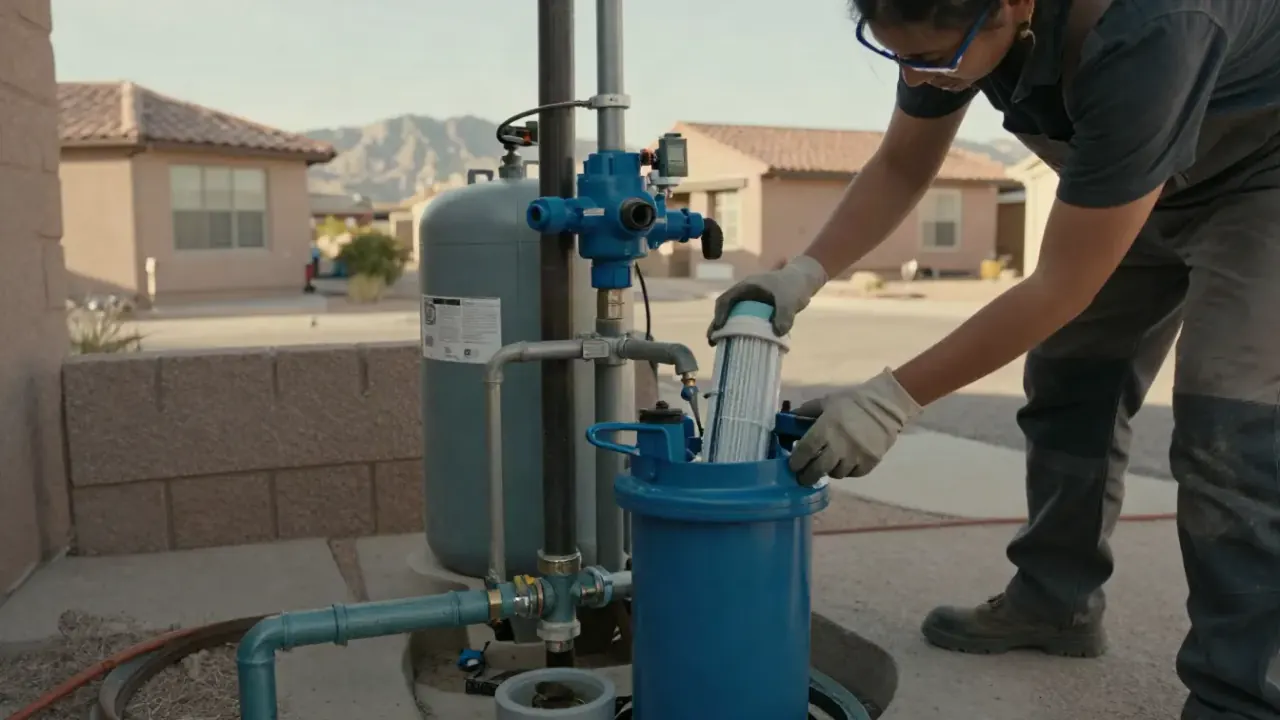 Salt-Free Water ConditionersIf your hardness test comes back moderate and you want scale control without adding sodium, a salt-free conditioner may fit. We size it off the same gpg reading so the media lasts its full life instead of clogging in two years.Explore →
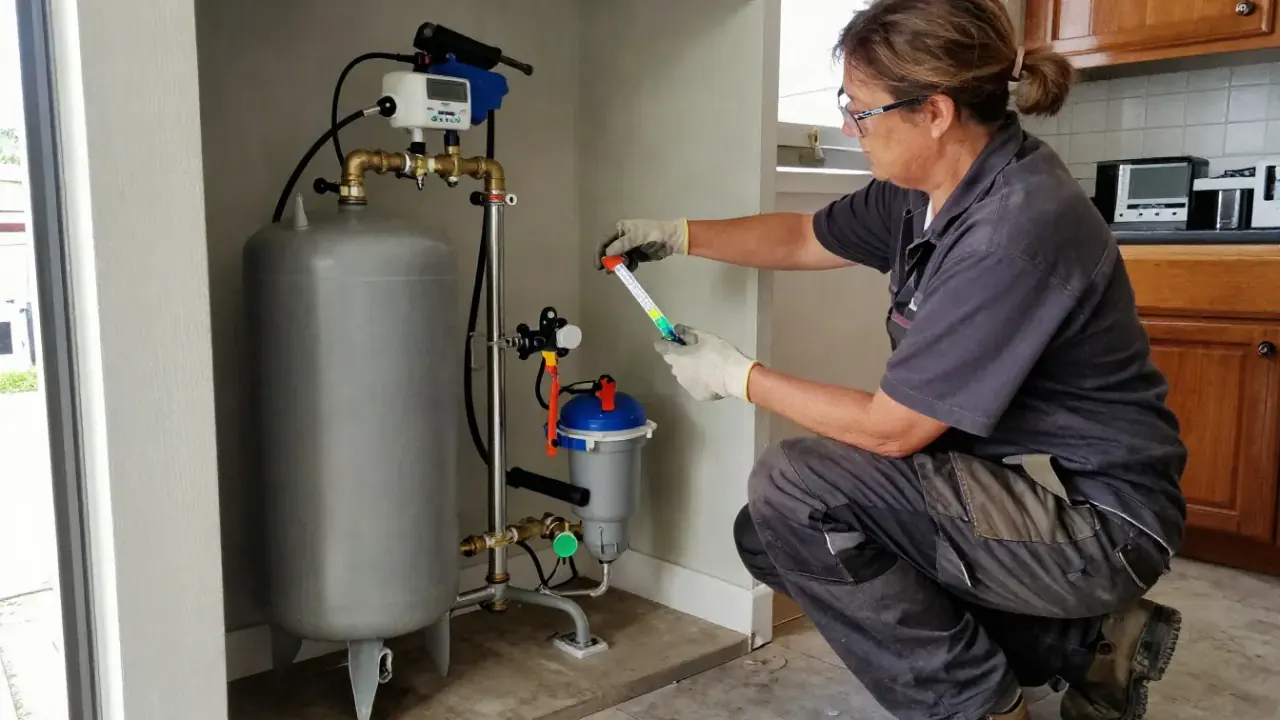 Whole-House Water FiltrationHigh TDS or iron on your test often means you need filtration before softening. We pair an activated carbon and sediment filter stage with your softener so chlorine and grit never reach the resin tank.Explore →
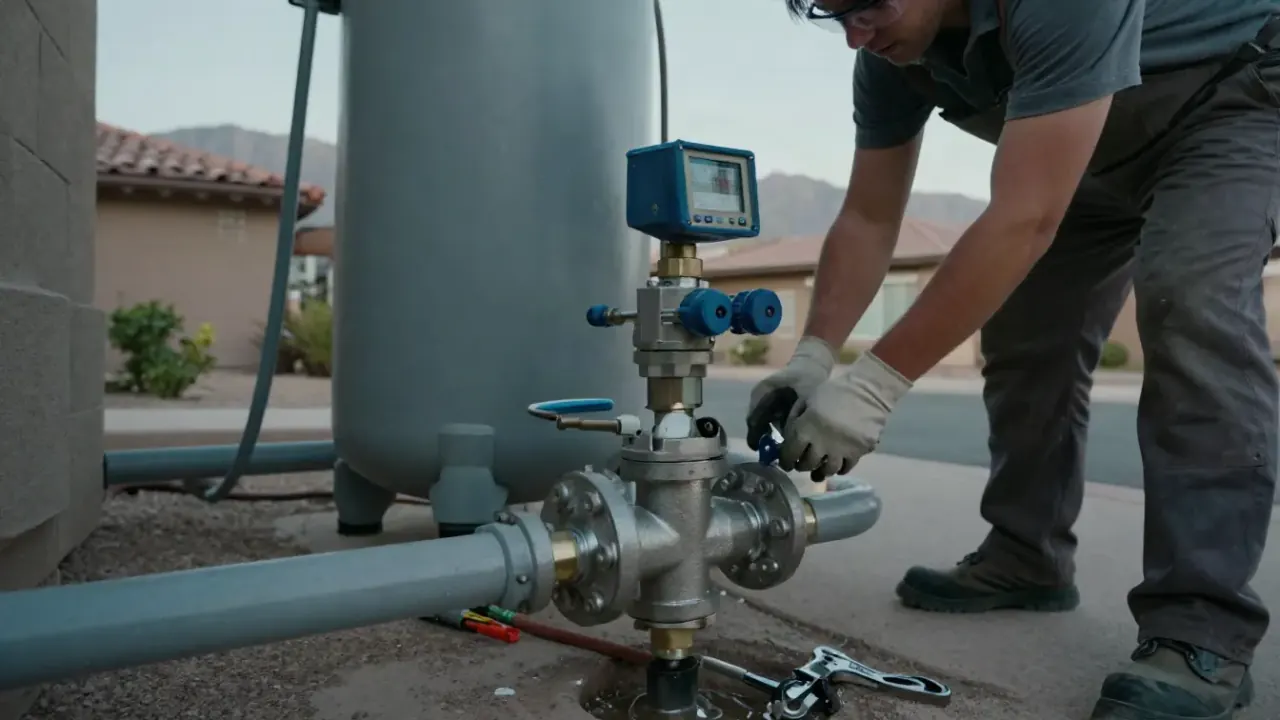 Reverse Osmosis SystemsHard water makes RO membranes scale and fail early. Once we know your gpg, we can set up a drinking water RO with the right pretreatment so your RO membrane lasts its rated life instead of months.Explore →
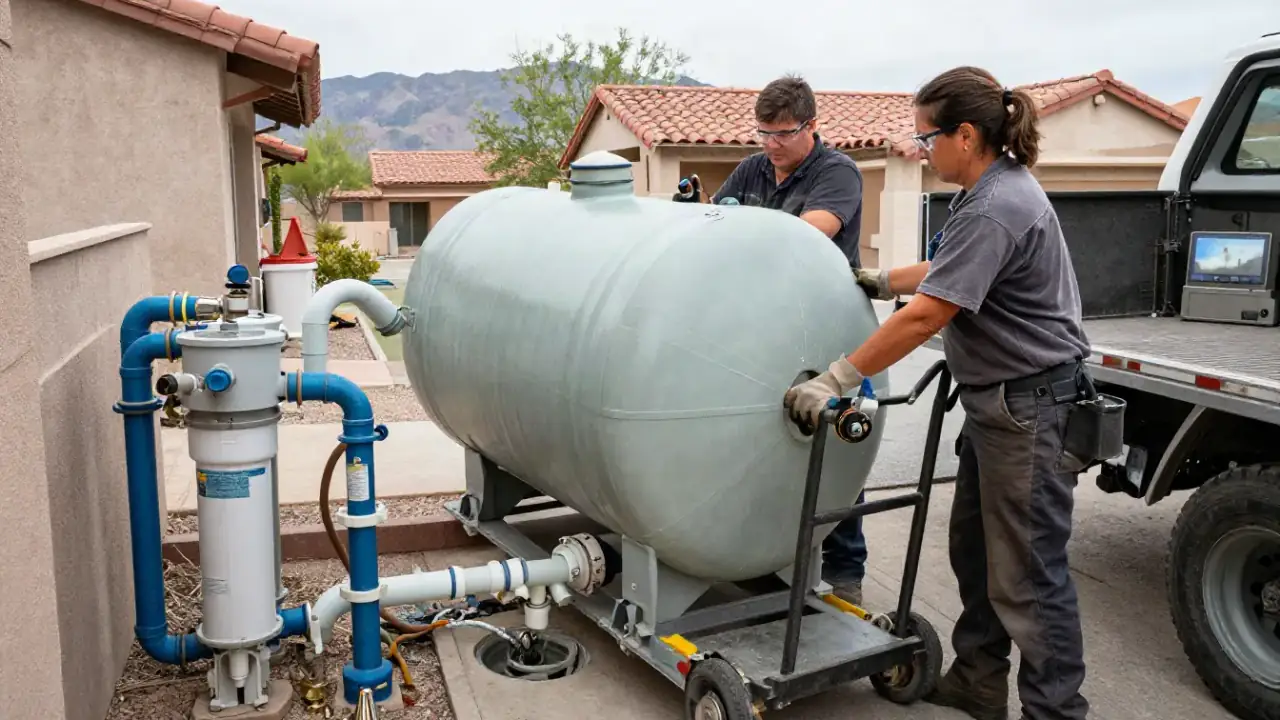 Resin Tank ReplacementIf your test shows hardness passing straight through a running softener, the resin is likely exhausted or iron-fouled. We swap the resin tank and check the control head at the same visit.Explore →
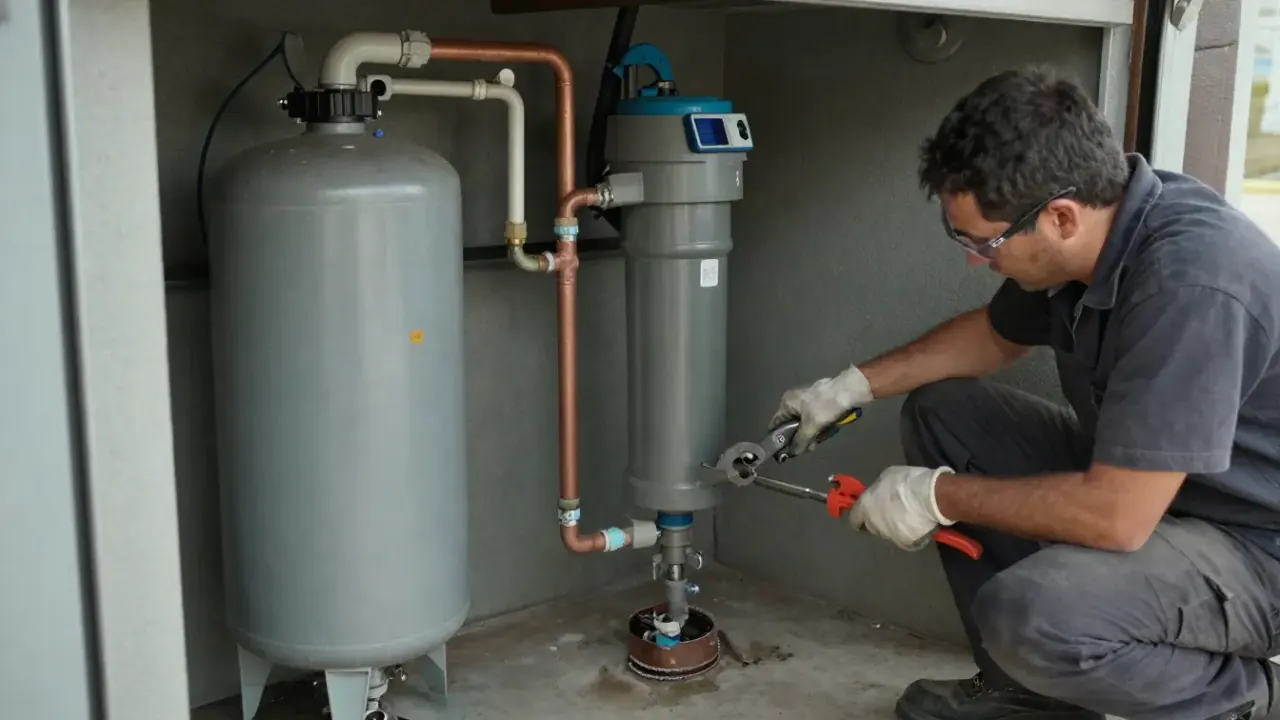 Softener Valve and Control Head RepairA softener that will not regenerate usually has a control valve or piston problem, not bad resin. We test the water first to confirm the resin is still good, then repair the Fleck, Autotrol, or Clack head.Explore →
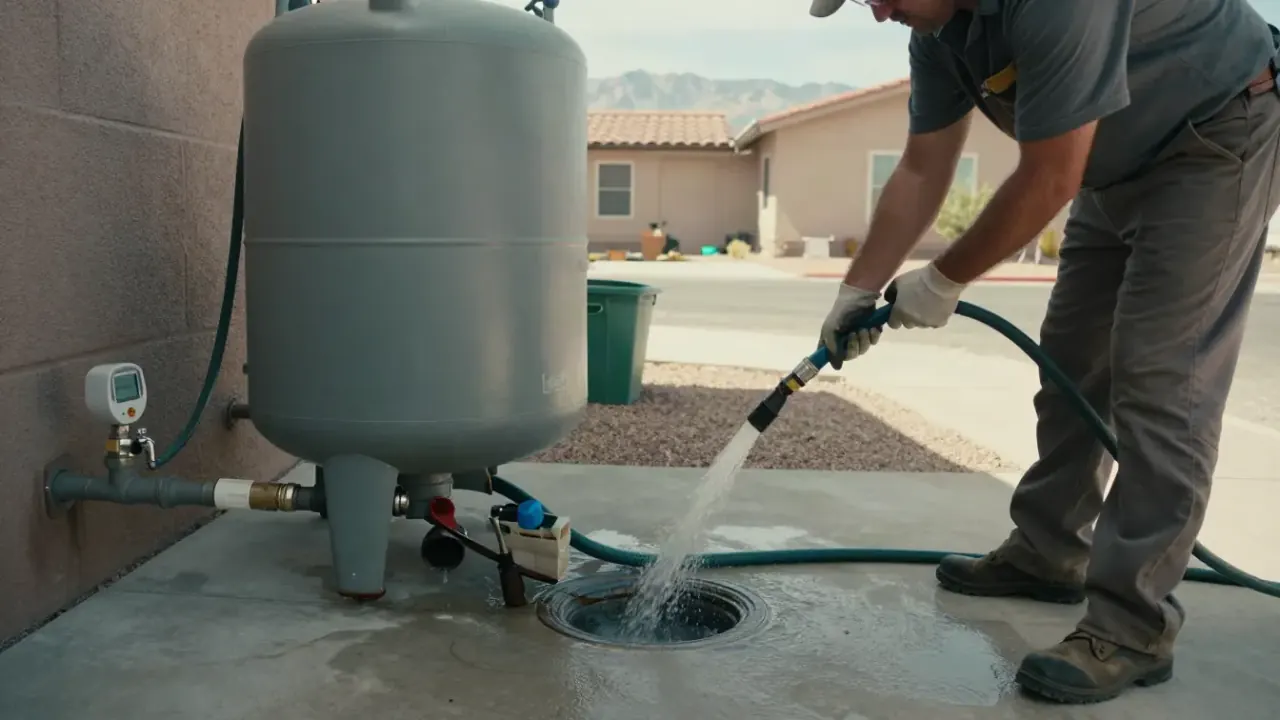 Brine Tank CleaningSalt bridge and brine tank sludge stop regeneration cold. After testing confirms hard water is getting through, we vacuum the tank, clear the brine well, and reset your salt schedule.Explore →
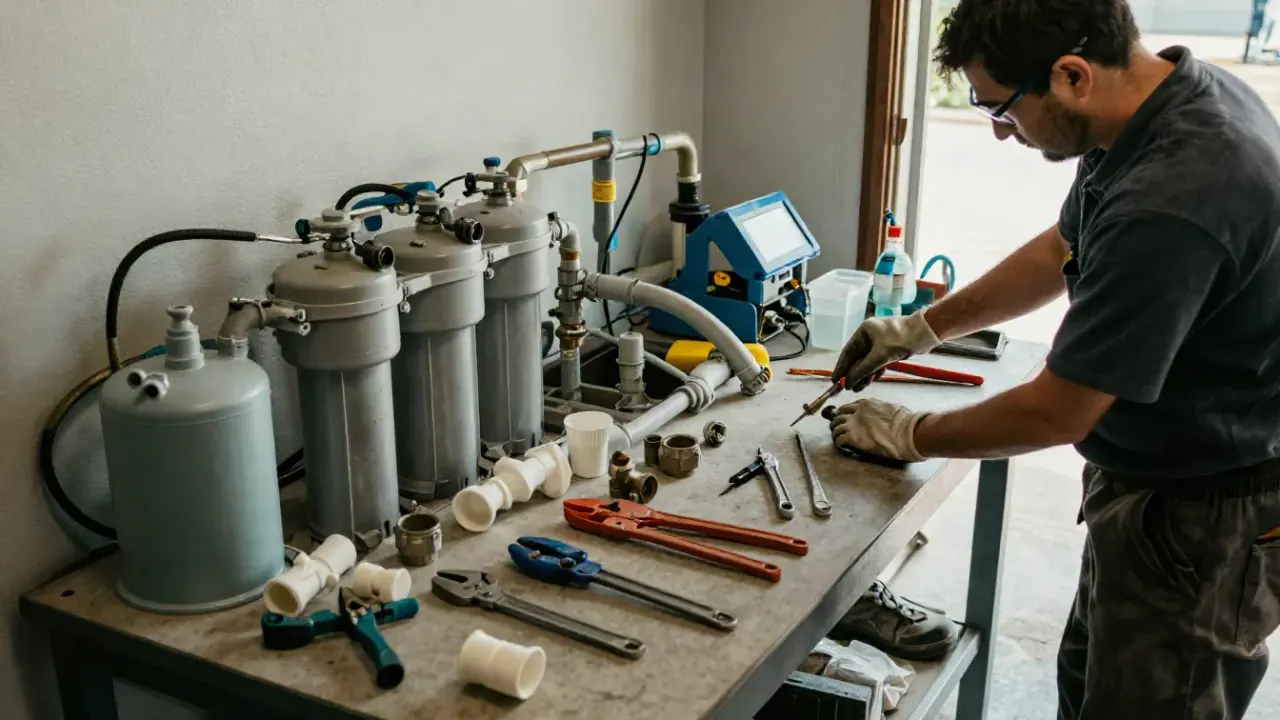 Softener Removal and ReplacementOld undersized units are common in Queen Creek homes built before 2010. We test the incoming water, pull the old softener, and set a correctly sized replacement with new bypass valve and pex tubing.Explore →
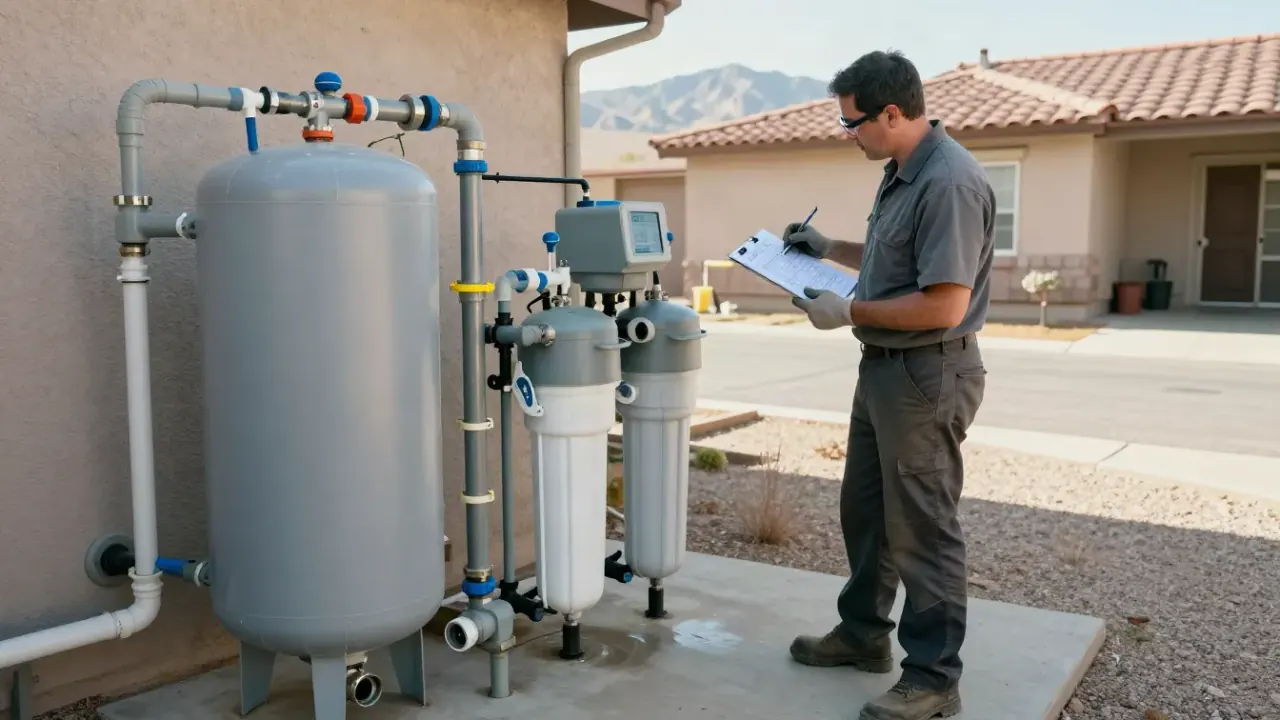 Scale Protection for Water Heaters and FixturesHardness above 10 gpg shortens water heater life. After testing, we install scale protection on the heater inlet and fixtures so you are not replacing an anode rod every other year.Explore →
One free on-site test tells you exactly what is in your water and what to do about it. Licensed, local, and no obligation to buy. Call (480) 337-3003 and we will get you on the schedule, often the same day.
Book Free Test (480) 337-3003 →Reach us at (480) 337-3003 Monday through Friday, 8 a.m. to 6 p.m., and we will book your free water test. Most Queen Creek calls get a same-day slot if you ring before noon. Leave a message after hours and we call back first thing the next morning.