Hard water is back after years of soft water
We test hardness at the tap. If it reads above 3 grains per gallon with a working valve, the resin is spent. A resin tank exchange in Queen Creek, Arizona gets you back to 0 to 1 grains the same day.
If your softener quit softening, Resin Tank Replacement Queen Creek AZ is the fix that actually works. We pull the spent tank, swap in fresh NSF/ANSI 44 resin, and pressure-test the whole loop before we pack up. Whether you are on a well in Hastings Farms or city water near Queen Creek Station, we handle water softener resin replacement in Queen Creek AZ the same day in most cases. Call (480) 337-3003 and we will tell you straight what your system needs.
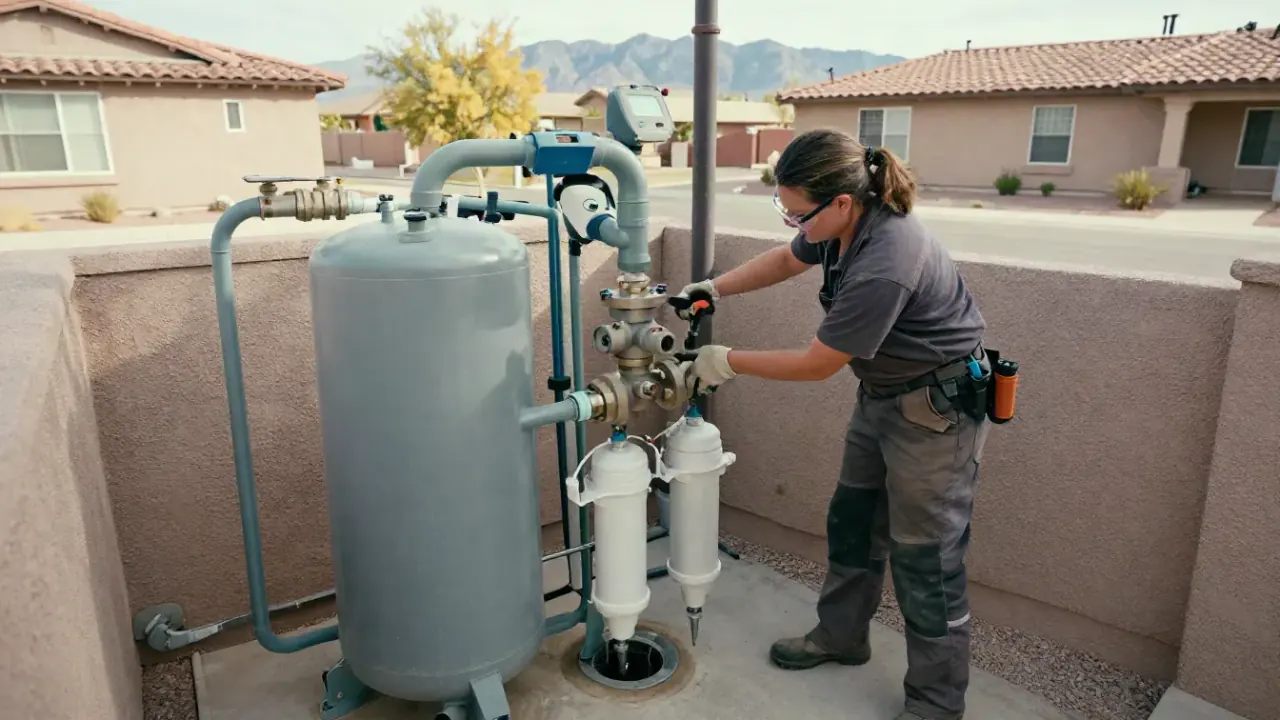
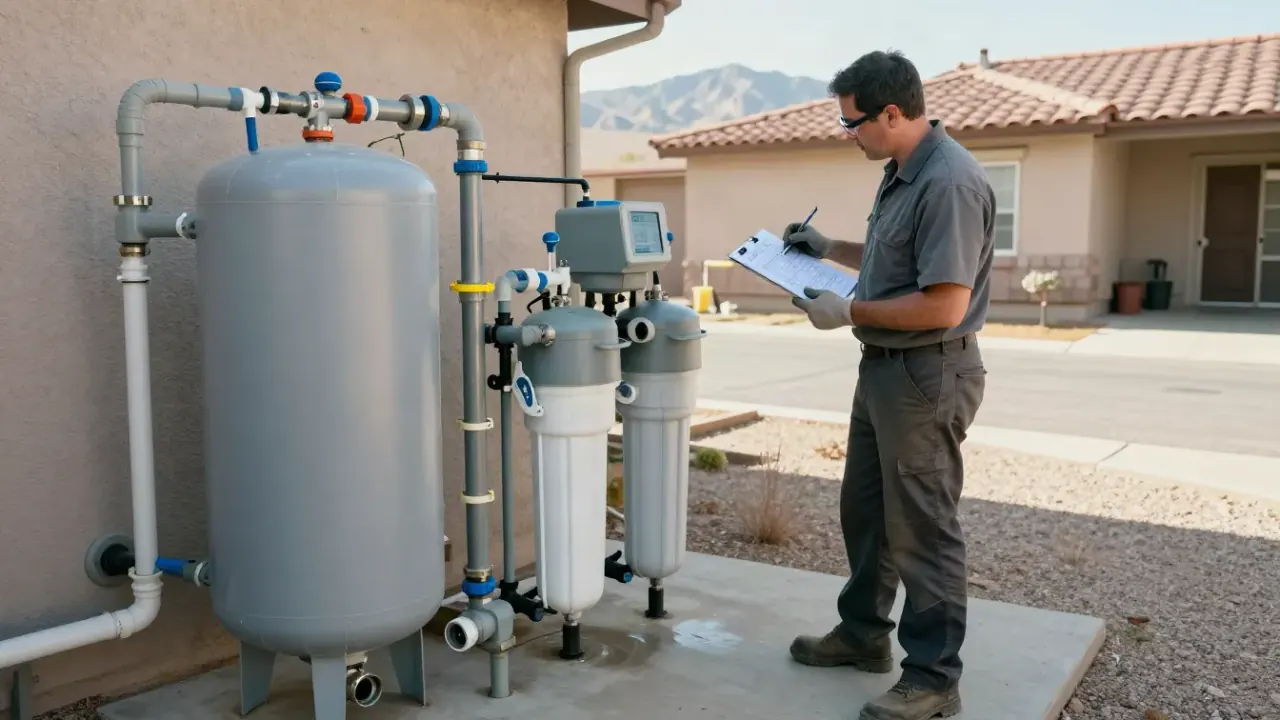
Resin Tank Replacement Queen Creek AZ is the removal and replacement of the fiberglass pressure vessel that holds the ion exchange resin your softener depends on. Inside that tank, millions of resin beads trade calcium and magnesium for sodium. After 8 to 15 years, those beads fracture, foul with iron, or channel so badly the water slips past untreated. We cut the bypass valve in, drain the old tank, drop in new resin, and reset the control head so regeneration runs on the right schedule again.
Most Queen Creek homes sit on water between 12 and 20 grains per gallon, and that hardness chews through resin faster than the national average. If you are noticing spotting on dishes and glass, water heater scale, or low water pressure from scale, the tank is usually the culprit. We see it constantly in Encanterra and Harvest, where builders installed softeners that have now run a decade or more. A resin media replacement Queen Creek AZ visit costs far less than replacing the whole unit.
Every resin tank replacement we do covers the full swap, not just the tank. You get testing, the new vessel, fresh resin, the labor, and haul-away of the old unit. If your control head needs seals or a rebuild, we quote that separately before we start, so the price you hear is the price you pay.
A pressure-rated fiberglass vessel sized to your home, in 9x48, 10x54, or 12x52 depending on household demand and hardness level. Every tank we install meets NSF/ANSI 44.
High-capacity cation resin filled to the correct bed depth, with the gravel underbed set right so the resin does not wash out during backwash. This is the part that actually softens your water.
We reprogram your Fleck, Autotrol, or Clack head for the new bed, set the regeneration schedule to your hardness, and walk you through the settings so you understand what the display is telling you.
Before and after testing with a water hardness test kit and TDS meter. You see the grains per gallon drop in real numbers, not a promise. If it does not test soft, we keep working.
We drain and remove the old vessel and take it with us. No tank sitting in your side yard, no resin beads in the driveway. The area gets swept before we pull out.
We run a water hardness test kit and TDS meter on an untreated sample and a post-softener sample. That tells us whether the resin is spent or the control valve is the real problem. Takes about 15 minutes, and you get the numbers in writing.
We shut the bypass valve, kill the water heater feed, and relieve pressure with a gauge. The brine tank gets vacuumed out with a brine tank vacuum so salt sludge does not end up on your garage floor. Expect 20 to 30 minutes of setup.
Using a resin tank wrench and control valve wrench, we separate the head from the vessel and lift the old tank out. If the control head is a Fleck, Autotrol, or Clack unit in good shape, we rebuild the seals and reuse it. A cracked or stripped head gets flagged before we go further.
We set the new tank, add the gravel underbed, and pour fresh NSF/ANSI 44 resin to the correct bed depth for your tank size. Pex tubing and fittings get cut with a tubing cutter and soldered or crimped clean. This is the step that decides how the next decade of soft water performs.
We repressurize, run a manual regeneration, and test hardness at the tap. You get a walkthrough of the control head settings plus the brine level you should maintain. Most jobs wrap in 2 to 4 hours, and the system is back in service the same day.
Purpose-built equipment, used by trained technicians — so the job is done accurately the first time.
Measures grains per gallon before and after the swap so you see the actual result, not a guess. We test untreated and treated samples on every call.
Reads total dissolved solids to confirm the resin is doing its job and to catch problems the hardness test alone can miss.
Purpose-built wrenches that separate the head from the vessel without cracking threads or stripping the collar on Fleck, Autotrol, and Clack units.
Pulls out salt sludge and brine tank debris before we open the system, keeping your garage floor clean and the new resin uncontaminated.
Clean square cuts and code-correct pex connections on the bypass loop, so the new tank ties in without leaks or makeshift fittings.
Lets us relieve pressure safely and isolate the softener so the rest of the house keeps water while we work.
A builder-installed 9x48 softener was testing 16 grains per gallon at the tap. Dishes came out spotted, the water heater was popping, and the family was adding extra detergent to every load.
We swapped in a 10x54 tank with fresh NSF/ANSI 44 resin and reset the Fleck head. Post-install testing read 0 grains per gallon. The popping in the water heater stopped within a week.
Iron was fouling the resin every couple of years. The homeowner was buying salt constantly and the water still tasted metallic. A TDS meter reading confirmed the resin was channeled.
We installed a sediment filter and iron pretreatment ahead of a new 12x52 resin tank. Salt use dropped about 25 percent and the metallic taste cleared. Hardness now tests under 1 grain per gallon.
A home inspection flagged the softener as non-functional. The seller needed it resolved fast, and the buyer wanted proof the system actually worked.
We replaced the resin tank, reused the sound control head, and provided a hardness test showing 0 grains per gallon plus a receipt with the 5-year tank warranty. The inspection item cleared the same week.
A spent resin tank shows up in ways most homeowners do not connect to the softener. Here are the calls we get most, and what is actually going on.
Ask a pro →We test hardness at the tap. If it reads above 3 grains per gallon with a working valve, the resin is spent. A resin tank exchange in Queen Creek, Arizona gets you back to 0 to 1 grains the same day.
We inspect the vessel and the distributor, replace the failed tank, and flush the brine tank with a vacuum. New resin goes in with a fresh underbed so it stays where it belongs.
We pull the head, check for iron bacteria and sludge, and replace the resin if it is fouled. For well water, we add pretreatment so the new bed is not ruined in two years.
We restore softening at the tank, flush the water heater, and clean aerators. Once hardness is handled at the source, scale stops forming and pressure recovers.
$650 - $1,400 depending on tank size, resin, and control head condition
Typical 2026 pricing for resin tank replacement in Queen Creek runs $650 to $1,400 depending on tank size, resin type, and whether the control head needs work. A standard 9x48 swap with city water sits at the low end. Well water systems needing iron pretreatment, a larger 12x52 tank, or a head rebuild land at the top. We test first, quote flat, and the price covers the tank, resin, labor, and haul-away. If you have been looking for water softener resin replacement near me Queen Creek AZ, this is the honest number.
A new resin tank costs a fraction of replacing the whole softener and protects thousands of dollars of plumbing and appliances. Most customers break even on salt savings and appliance life within a few years.
A 9x48 tank fits most two- to three-bath homes. Larger households or high hardness need a 10x54 or 12x52, which adds $150 to $300 in parts and resin.
Standard high-capacity cation resin is the baseline. Fine-mesh resin for iron-heavy well water costs more but lasts longer in that application.
If the Fleck, Autotrol, or Clack head is sound, we reuse it and save you money. A rebuild with new seals and pistons adds $150 to $350.
City water jobs are straightforward. Well water usually needs a sediment filter or iron pretreatment added, which raises the total but protects the new resin.
“Our softener quit around year nine and the dishes were coming out cloudy. The tech tested the water, showed me the numbers, and had a new resin tank in that afternoon. Two hours, flat price, no drama. Water feels slippery again and the spots are gone. I have already sent two neighbors his way.”
Dana R.Homeowner, Ironwood Crossing
✓ Verified“We are on a well out here and the iron was eating our resin alive. They did the resin tank replacement and added a sediment filter ahead of it so it would not happen again. Explained the brine level to keep and how often to check it. Six months in, still testing soft. Worth every dollar.”
Marcus T.Homeowner, Encanterra
✓ Verified“Called about low water pressure and figured we needed a whole new softener. Turned out the resin was channeled and the tank was the problem, not the valve. They swapped the tank, reused the control head, and saved us a few hundred bucks. Honest crew, cleaned up the garage before they left.”
Priya S.Homeowner, Harvest
✓ VerifiedMost resin tank replacement jobs in Queen Creek run $650 to $1,400 in 2026, including the tank, resin, labor, and disposal of the old vessel. A basic 9x48 swap with standard resin sits at the low end. Well water systems that need iron pretreatment, a larger 12x52 tank, or a control head rebuild push toward the top. We quote the exact number after testing your water.
Plan on every 8 to 15 years, and lean closer to 8 if you are on well water or your hardness runs above 15 grains per gallon. Queen Creek municipal water averages 12 to 18 grains, so most tanks here are done by year 10. Iron, chlorine, and hot garage storage all shorten resin life. If your softener is over a decade old and the water feels hard again, get it tested.
The clearest signs are hard water returning, spotting on dishes and glass, soap that will not lather, and a softener that runs long regeneration cycles without fixing anything. You may also see resin beads in the brine tank or a tank that feels light when you rock it. Rust-colored water or pressure loss points to a failing vessel. Any of those means it is time for a test.
You can, but it is messy, heavy work. A full 10x54 tank holds roughly 80 pounds of wet resin, the head has to be resealed without cracking the threads, and the control valve needs reprogramming for the new bed. Get the bypass or gravel underbed wrong and you flood the garage. Most homeowners find the $650 to $1,400 for a pro is money well spent.
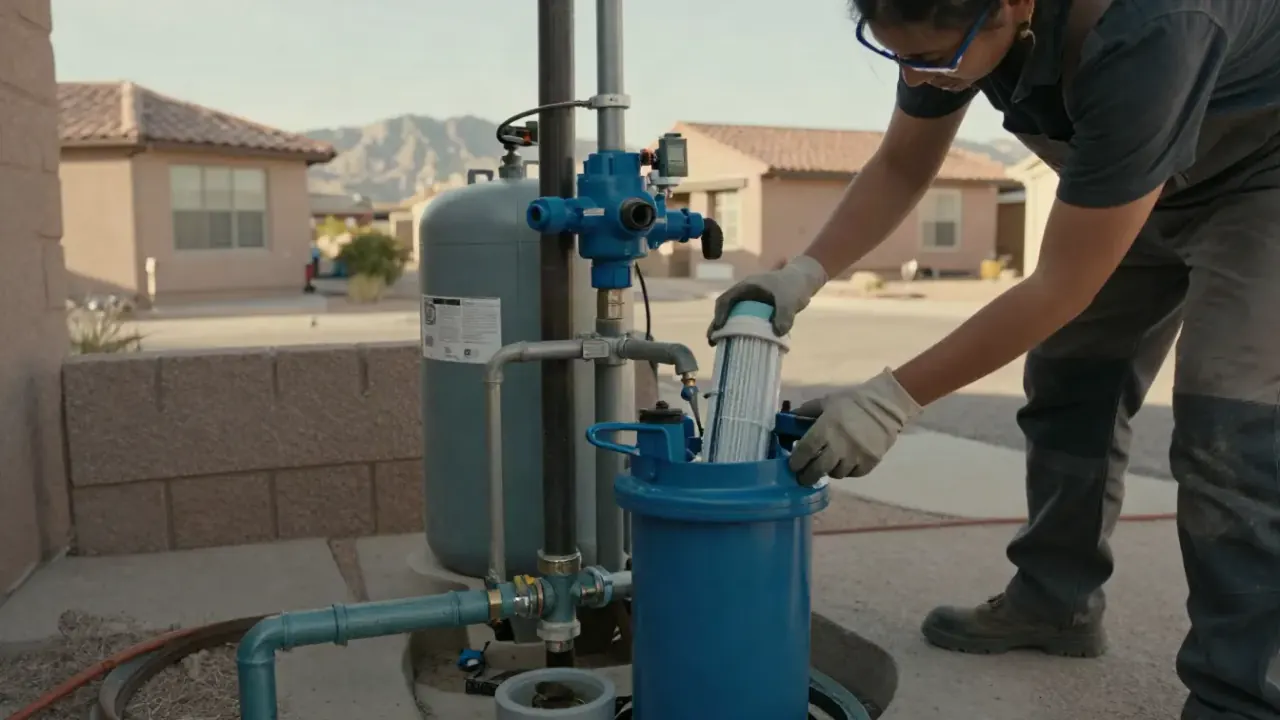 Salt-Free Water ConditionersIf you are tired of hauling salt, a salt-free conditioner is a real alternative. We install and service these units across Queen Creek and can compare the output against your current softener before you switch.Explore →
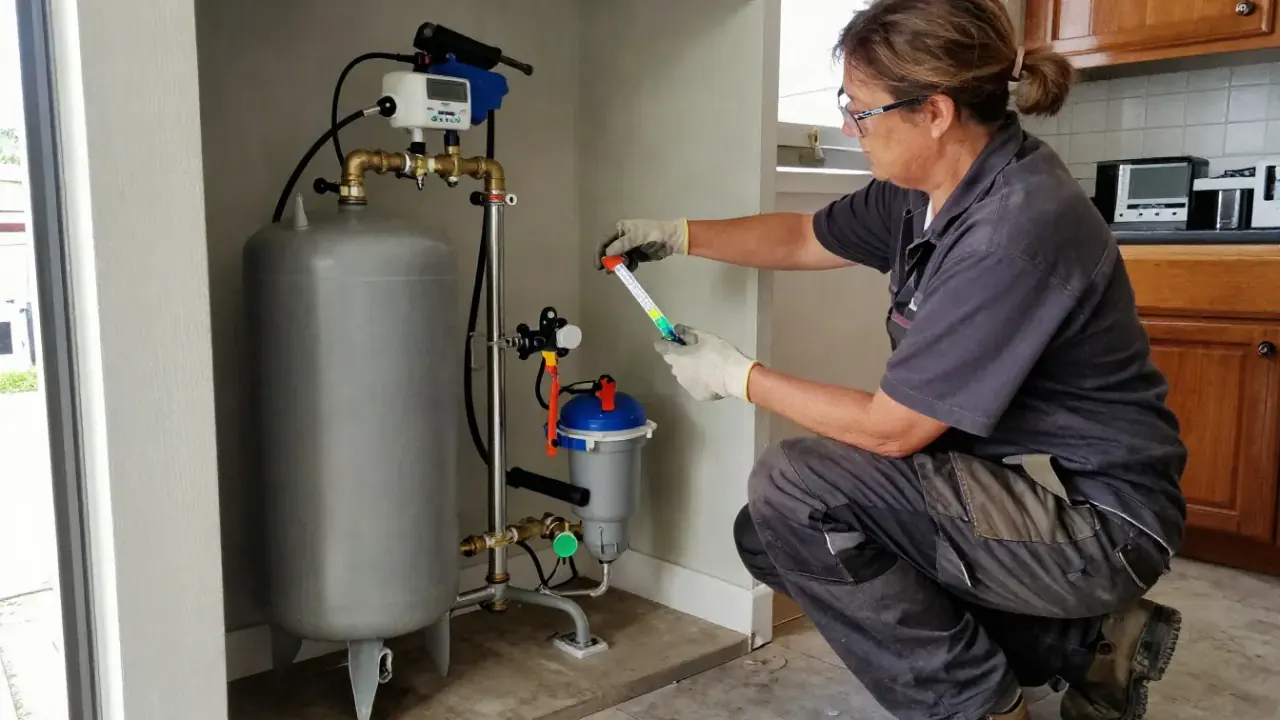 Whole-House Water FiltrationA whole-house filter ahead of the softener catches sediment and chlorine before they reach the resin. Pairing the two extends resin life and keeps the brine tank cleaner between resin tank replacement visits.Explore →
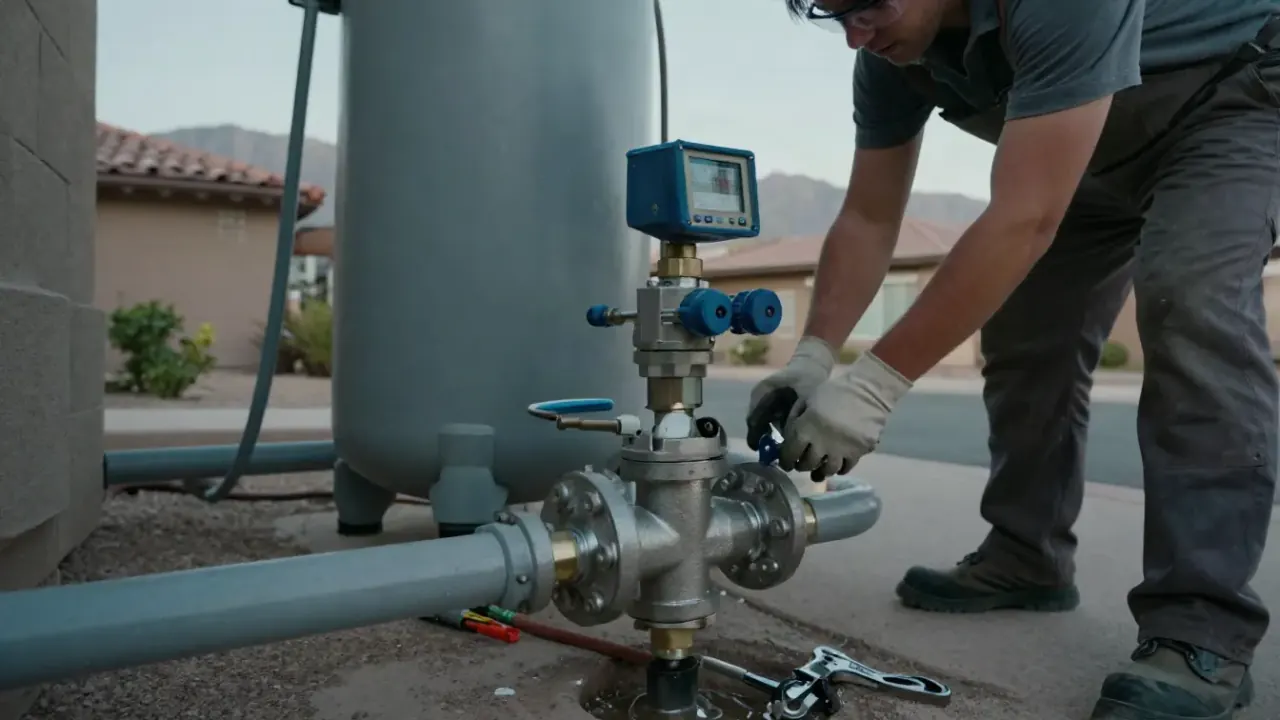 Reverse Osmosis SystemsAn RO membrane under the sink polishes the water your softener already treated. When we swap a resin tank, we check the RO pre-filter and membrane so your drinking water stays clean.Explore →
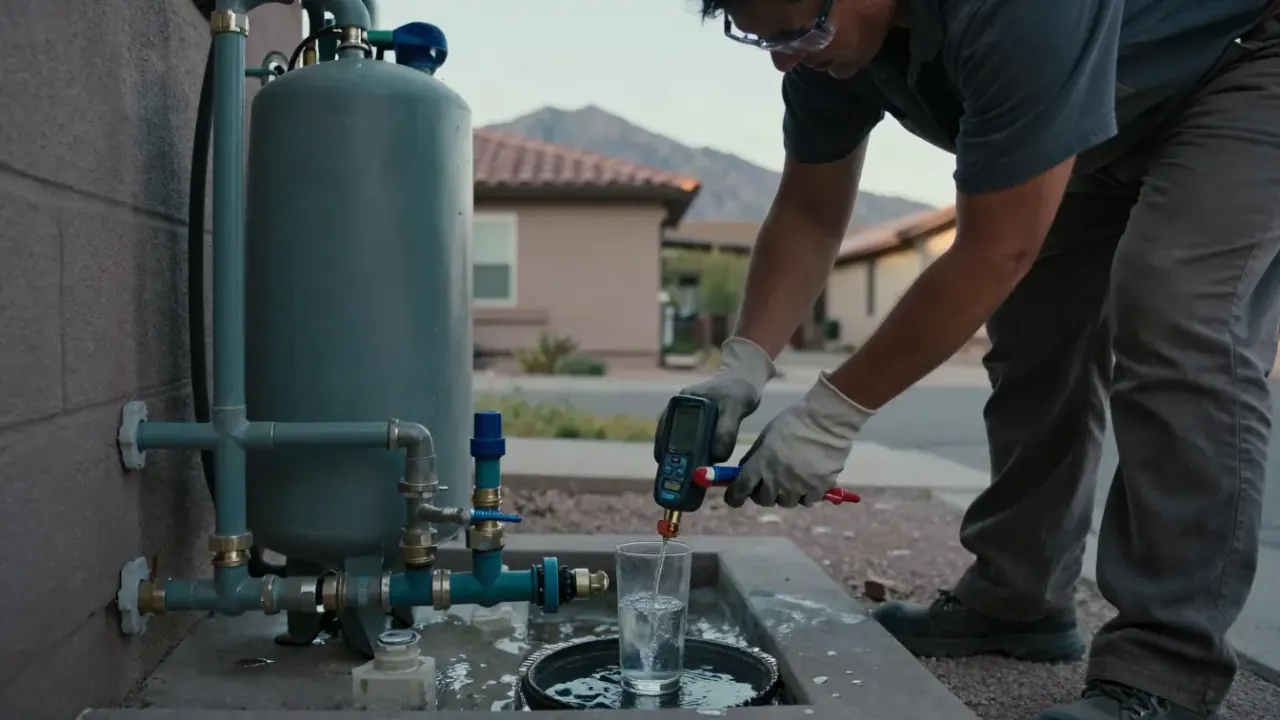 Water Hardness TestingWe test hardness and TDS before recommending any repair. A 15-minute test tells you whether you need a new resin tank or just a control head adjustment, and it saves you from paying for work you do not need.Explore →
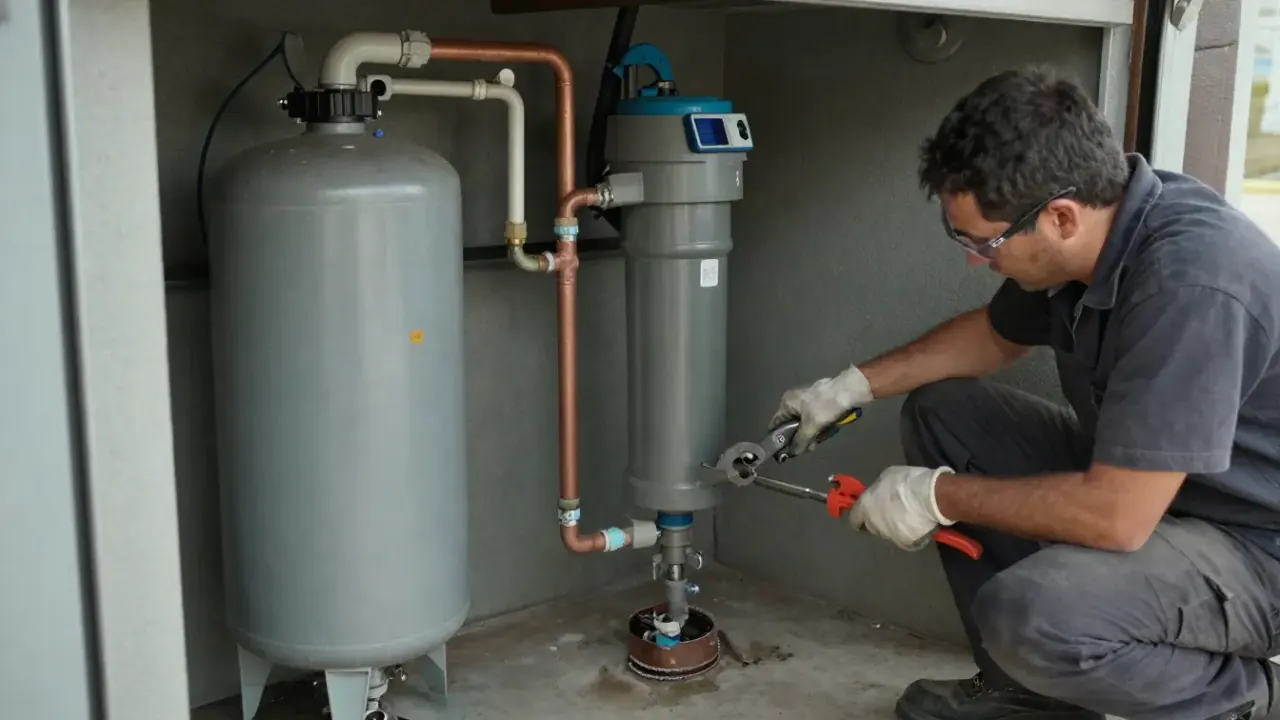 Softener Valve and Control Head RepairSometimes the resin is fine and the control valve is the problem. We rebuild Fleck, Autotrol, and Clack heads, replace seals and pistons, and reprogram regeneration schedules so the softener actually does its job.Explore →
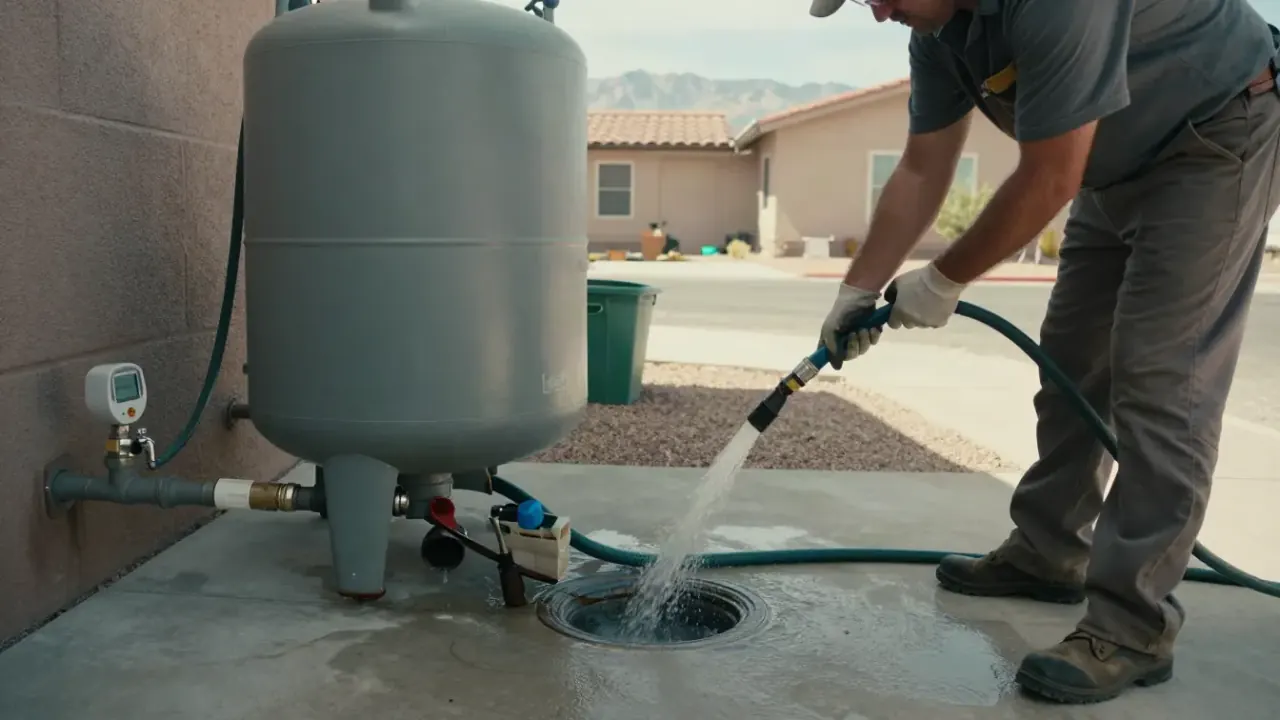 Brine Tank CleaningSalt bridge and brine tank sludge stop regeneration cold. We vacuum out the tank, break up the crust, and reset the brine level so the resin gets the salt dose it needs to recharge.Explore →
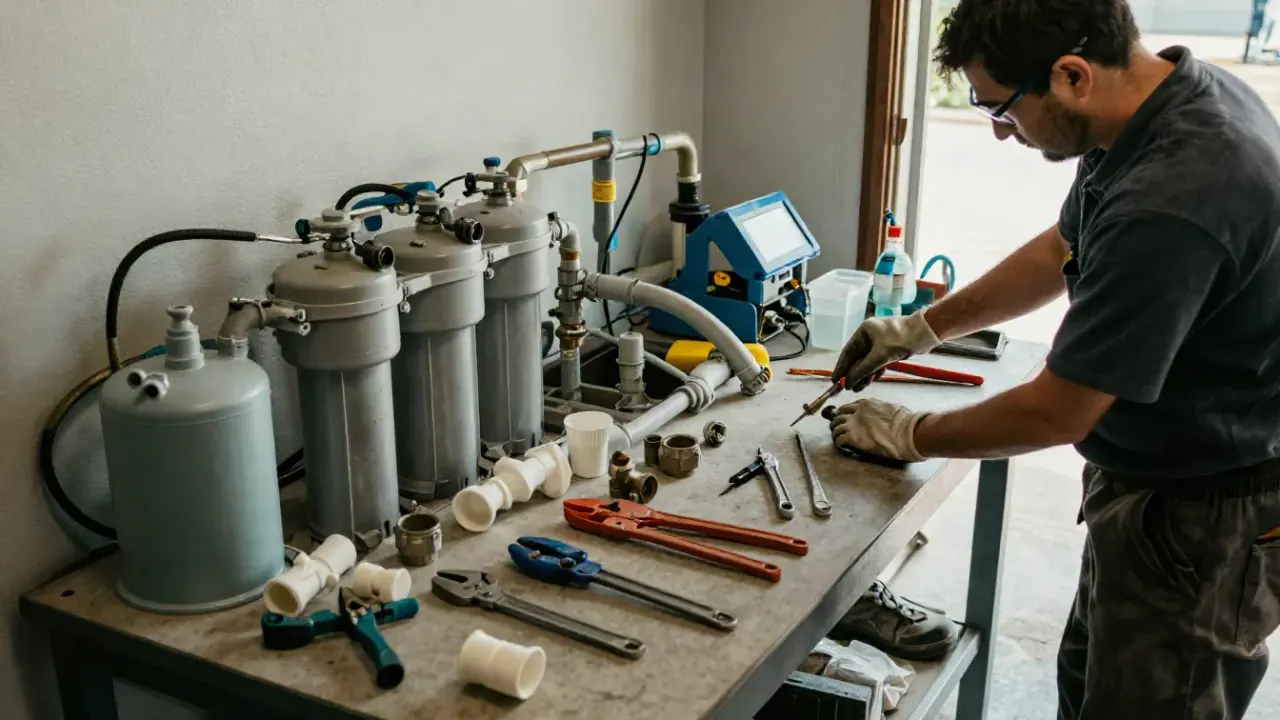 Softener Removal and ReplacementUpgrading to a bigger unit or ditching an old one? We pull the existing softener, cap the lines, and set the new system in one visit, with the old equipment hauled away.Explore →
 Scale Protection for Water Heaters and FixturesHard water scale builds on heating elements and aerators. We install scale protection and flush water heaters so the damage hard water already did gets reversed where possible.Explore →
Hard water does not wait, and neither should you. We answer the phone, quote the job straight, and carry the parts to finish it. Licensed, bonded, and warrantied on every resin tank we install. Call now for same-day service in Queen Creek and Maricopa County.
Book My Replacement (480) 337-3003 →Reach us at (480) 337-3003 Monday through Friday, 8 a.m. to 6 p.m., and we will book your free water test. Most Queen Creek calls get a same-day slot if you ring before noon. Leave a message after hours and we call back first thing the next morning.