How to Clean a Brine Tank Safely
A complete guide to cleaning your water softener brine tank safely in Queen Creek, AZ - tools, steps, sludge removal, and when to call a pro.
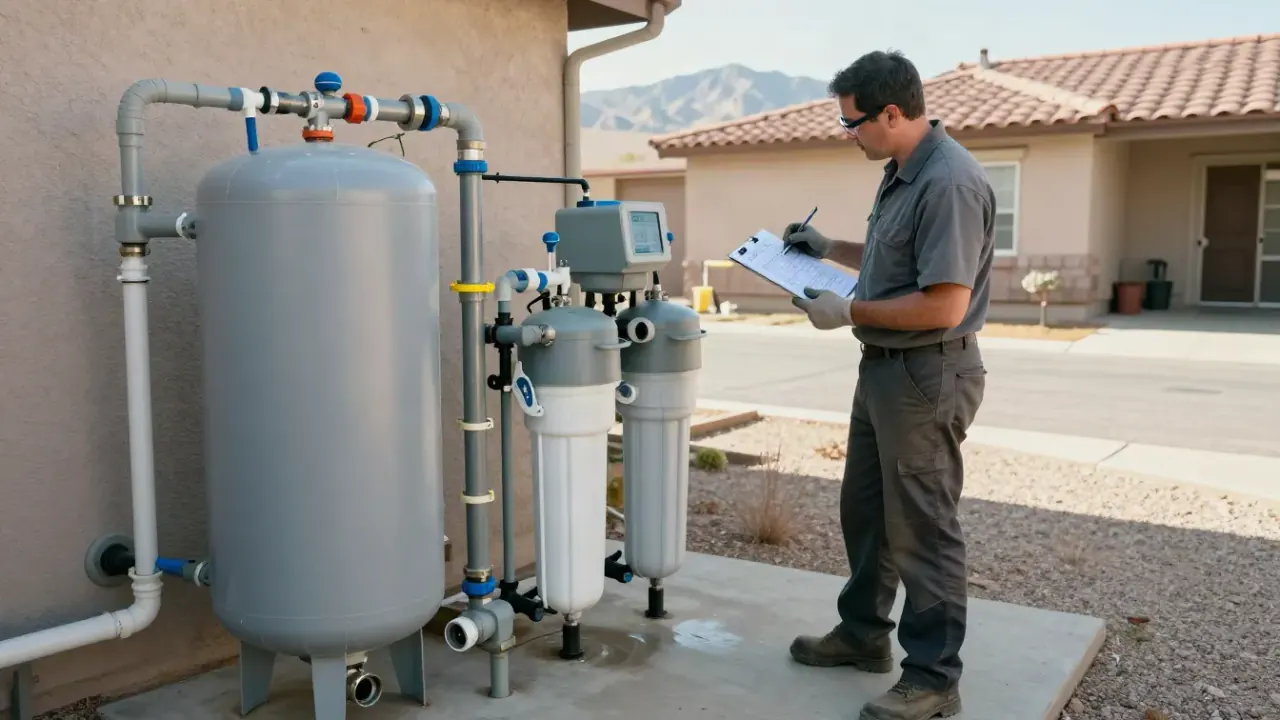
Cleaning a brine tank safely means shutting off the softener, removing the salt and any salt bridge, scooping out the sludge at the bottom, scrubbing the walls with a mild dish soap solution, rinsing thoroughly, and restarting a regeneration cycle. Never pour bleach or other harsh chemicals into the tank. In Queen Creek, where water hardness regularly runs 12 to 18 grains per gallon, a brine tank needs a full clean-out every 12 months - sooner if you see a crusty layer or smell sulfur.
This guide walks you through the exact brine tank cleaning steps our technicians use, explains how often to clean a brine tank in Queen Creek Arizona, and covers the mistakes that crack tanks or wreck resin. You'll also find out when a job is better left to a pro.
Why Brine Tanks Get Dirty in Queen Creek
Brine tanks in Queen Creek get dirty because our municipal water carries dissolved calcium, magnesium, and trace iron that concentrate in the tank as salt dissolves and regenerates the resin. Over months, those minerals settle into a brown, jelly-like sludge at the bottom.
That sludge is not just cosmetic. It blocks the brine pick-up tube, slows regeneration, and forces the softener to work harder. We see it constantly in homes across Water Softener in Ironwood Crossing and other Queen Creek neighborhoods where the water supply comes from the same Colorado River and groundwater blend.
Two other factors make Queen Creek tanks dirtier than average:
- High evaporation. Summer temperatures push 110°F, and any standing water in the tank evaporates fast, leaving behind a mineral crust.
- Iron bacteria. Some wells and blended supplies carry iron bacteria that form a reddish slime inside the tank. That slime is harmless to drink but clogs the brine valve.
If you've noticed your softener using more salt than usual or your showers feeling hard again, the tank is the first place to look. A quick Water Hardness Testing Queen Creek AZ will tell you whether the softener is still keeping up.
How Often Should You Clean a Brine Tank in Queen Creek, AZ?
Clean your brine tank every 12 months in Queen Creek, and every 6 months if your home sits on well water or you've had iron issues. That's the short answer. The longer answer depends on three things: salt type, water source, and how hard your water runs.
Here's a simple schedule that works for most Queen Creek households:
- Municipal water, pellet salt: once a year.
- Municipal water, block salt: every 8-10 months (blocks leave more residue).
- Well water or high iron: every 6 months.
- Any time you see a salt bridge or a 1/4-inch crust: now, not later.
If you're on the fence, look at the tank. A clean tank shows loose, granular salt sitting in clear water. A dirty tank shows a solid crust, murky brine, or a distinct rotten-egg smell when you lift the lid.
For homeowners in Water Softener in Queen Creek Station and other newer developments, the 12-month schedule is usually enough because the water is consistent. Older properties with private wells need the shorter cycle.
Tools and Safety Gear You'll Need
Gather these before you start. A hardware store run mid-job is the fastest way to end up with a mess on your garage floor.
- Rubber gloves and eye protection
- A plastic scoop or clean cup (never metal - it can scratch the tank)
- A bucket for old salt and sludge
- Mild dish soap and warm water
- A soft-bristle brush or sponge
- A wet/dry shop vacuum (optional but helpful)
- Towels or a shallow pan to catch drips
Do not use bleach, ammonia, or abrasive cleaners. Bleach can damage the resin and the softener's internal seals, and it's a genuine safety hazard if it mixes with any acidic residue in the tank. If you're dealing with a stubborn smell, a diluted white vinegar rinse is the strongest thing we recommend.
Brine Tank Cleaning Steps
Follow these brine tank cleaning steps in order. The whole job takes 45 to 90 minutes for a standard 14-inch by 34-inch tank.
- Unplug the softener. Kill power at the outlet or the breaker. You do not want the unit starting a regeneration cycle while you're elbow-deep in the tank.
- Bypass the unit. Turn the bypass valve so water flows straight to the house. This keeps dirty tank water out of your plumbing.
- Remove the lid and check for a salt bridge. A salt bridge is a hard crust that forms across the top of the salt, leaving a hollow gap underneath. If you find one, break it up with a broom handle before scooping.
- Scoop out the salt. Save clean salt in a bucket if you want to reuse it. Discard any salt that's discolored or clumped.
- Remove the brine pick-up tube. Most tanks have a tube running from the top down to the bottom. Pull it gently and set it aside.
- Scoop out the sludge. Use a cup or shop vacuum to remove the brown layer at the bottom. This is the brine tank sludge removal step most homeowners skip - and it's the one that matters most.
- Wash the tank. Mix a few drops of mild dish soap in warm water. Scrub the walls, bottom, and lid with a soft brush. Rinse with clean water until no suds remain.
- Reassemble. Put the pick-up tube back, add fresh salt to the fill line (usually about halfway up the tank), and replace the lid.
- Restart the softener. Take it off bypass, plug it back in, and run a manual regeneration cycle. Check for leaks at the brine line and the drain.
If your tank has a severe iron slime problem, you may need to repeat the wash step twice. We've seen tanks in Water Softener in Hastings Farms that needed a second pass because the slime had worked into the seams.
How to Remove a Salt Bridge in a Brine Tank
A salt bridge is a hardened crust of salt that forms across the top of the tank while the space underneath stays hollow. It's the single most common cause of "my softener stopped working" calls we get in Queen Creek.
To remove a salt bridge in a brine tank, first unplug the softener and bypass it. Then use a long broom handle or wooden dowel to break the crust into chunks. Push down firmly but don't hammer - you can crack the tank wall. Once the bridge is broken, scoop out the loose pieces and check the brine pick-up tube for blockages.
Salt bridges form fastest when the tank is overfilled or when the humidity swings. In Queen Creek, our dry air usually prevents them, but a leaky brine line or a tank left in a hot garage can create the moisture that causes one.
Common Mistakes to Avoid
The biggest mistake is using bleach or harsh chemicals. Bleach kills the resin's ability to soften water and can void your warranty. If you're tempted, don't.
Other mistakes we see:
- Forgetting to bypass the unit. Dirty tank water gets pulled into your home's plumbing.
- Overfilling the salt. Salt above the water line doesn't dissolve and just sits there, creating a bridge.
- Scrubbing with metal tools. A metal scoop or brush scratches the plastic and gives sludge a place to hide.
- Skipping the pick-up tube. If the tube is clogged, the softener can't draw brine and regeneration fails.
- Not running a regeneration cycle after cleaning. The first cycle flushes out any remaining debris.
If your tank is cracked or the brine line is brittle, stop and call us. A cracked tank leaks brine onto your floor and can damage the control valve. We handle Brine Tank Cleaning Queen Creek AZ and can replace a damaged tank the same visit.
When to Call a Professional
Call a professional if the tank is cracked, the brine line is clogged beyond a simple flush, or you've cleaned the tank and the softener still isn't regenerating. Those symptoms usually point to a failed control head or a resin problem, not a dirty tank.
We also get called when homeowners find a thick iron slime that keeps coming back. That's a sign the resin itself is fouled. In that case, cleaning the tank alone won't fix it - you need a Resin Tank Replacement Queen Creek AZ or a full softener service.
Our team handles brine tank clean-outs, valve repairs, and full system checks across Queen Creek. If you'd rather not deal with the salt and sludge, we'll do it for you and haul the old salt away.
Frequently Asked Questions
How do I clean my brine tank safely in Queen Creek AZ?
Unplug and bypass the softener, scoop out the salt, remove the pick-up tube, scoop out the sludge, wash the tank with mild dish soap and warm water, rinse, reassemble, and run a regeneration cycle. Never use bleach. The job takes 45-90 minutes.
How often should I clean my water softener brine tank in Queen Creek?
Every 12 months for most Queen Creek homes on municipal water. If you're on well water or have iron issues, clean it every 6 months. Check for a salt bridge or crust every time you add salt.
What causes sludge in a brine tank in Queen Creek Arizona?
Dissolved calcium, magnesium, and trace iron in the water settle to the bottom as salt dissolves. High summer evaporation and iron bacteria speed it up. The result is a brown, jelly-like layer that clogs the brine pick-up tube.
Can I use bleach to clean my brine tank in Queen Creek?
No. Bleach damages the resin and internal seals, and it can react with acidic residue in the tank. Use mild dish soap and warm water, or a diluted white vinegar rinse for odors. Bleach can also void your softener warranty.
Who cleans brine tanks near me in Queen Creek AZ?
Queen Creek Water Softener cleans brine tanks, replaces damaged tanks, and services softeners across Queen Creek and nearby areas. We handle the salt, the sludge, and the disposal. Call (480) 337-3003 to schedule.
Get Help with Water Softener in Queen Creek
If your brine tank is cracked, your softener isn't regenerating, or you just want the job done right the first time, our team is ready. We provide Water Softener Queen Creek AZ service, including brine tank clean-outs, valve repairs, and full system tune-ups.
Call (480) 337-3003 to schedule your brine tank cleaning or a free water hardness test.